
Proven compliance.
Trusted certifications
Trusted certifications



Why choose us?
The continued trust these clients place in our products has been a driving force behind our sustained growth.
-
 International ExperienceOver 20 years of experience exporting to more than 20 countries in the USA, Europe, and Asia.
 -
Strict Quality Control5-step QC process from raw materials to packaging.
-
Large Production CapacityOwn 1 large factory and partner with 2 others, we are capable of handling huge orders like Costco's.
-
Stable Raw Materials100% Acacia wood sourced from sustainably managed plantations.
Impressive Number
100%
Centralized Quality Inspection
All items are consolidated at our facility for full inspection, sorting, and packing before shipment — ensuring consistent quality at scale across artisan-made products.
5000+
Extensive Artisan Network
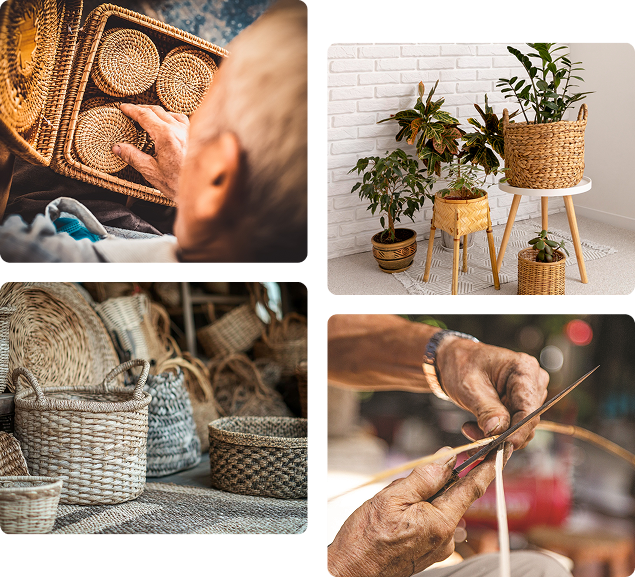
Powered by a network of 5,000+ artisans across traditional craft villages, enabling flexible production capacity while preserving authentic handwoven quality.
27+
Years of OEM Experience
Proven track record working with global buyers across multiple product categories.
100+
Containers / Month
Production can be scaled up to meet growing retail demand without compromising quality.
Products
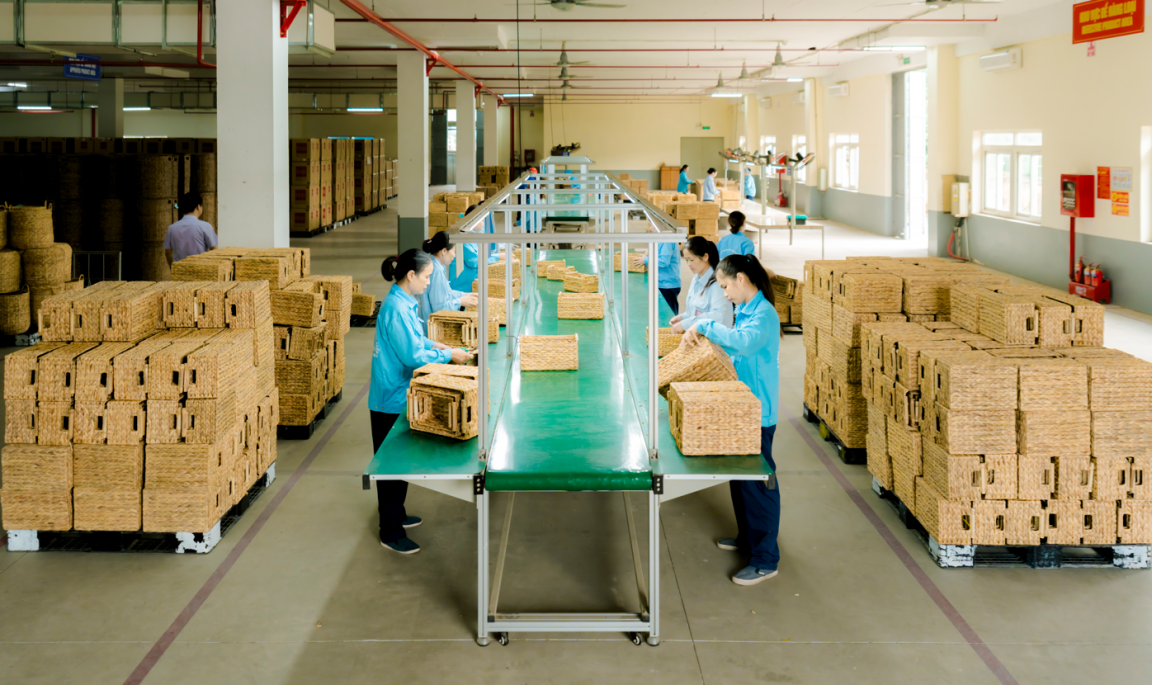
An overview of our production strengths, where skilled craftsmanship is integrated with controlled processes to ensure consistent quality and reliable output at scale.
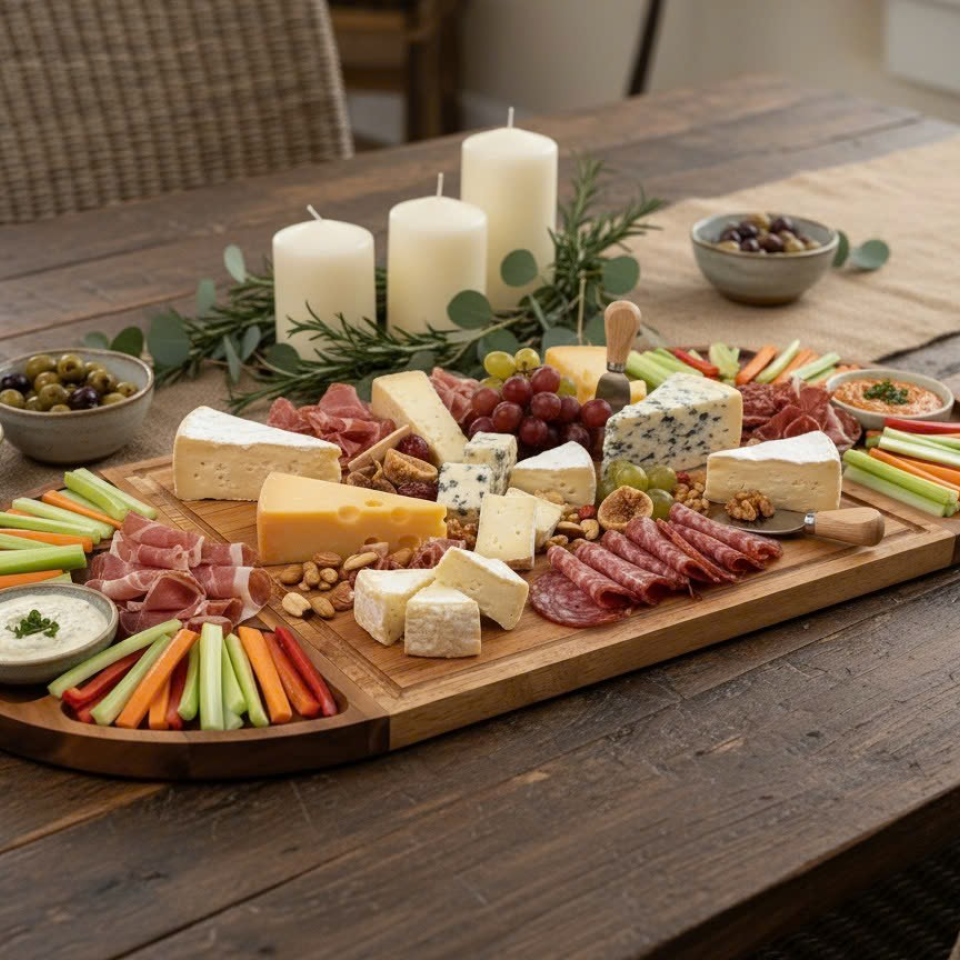
Storage Solutions
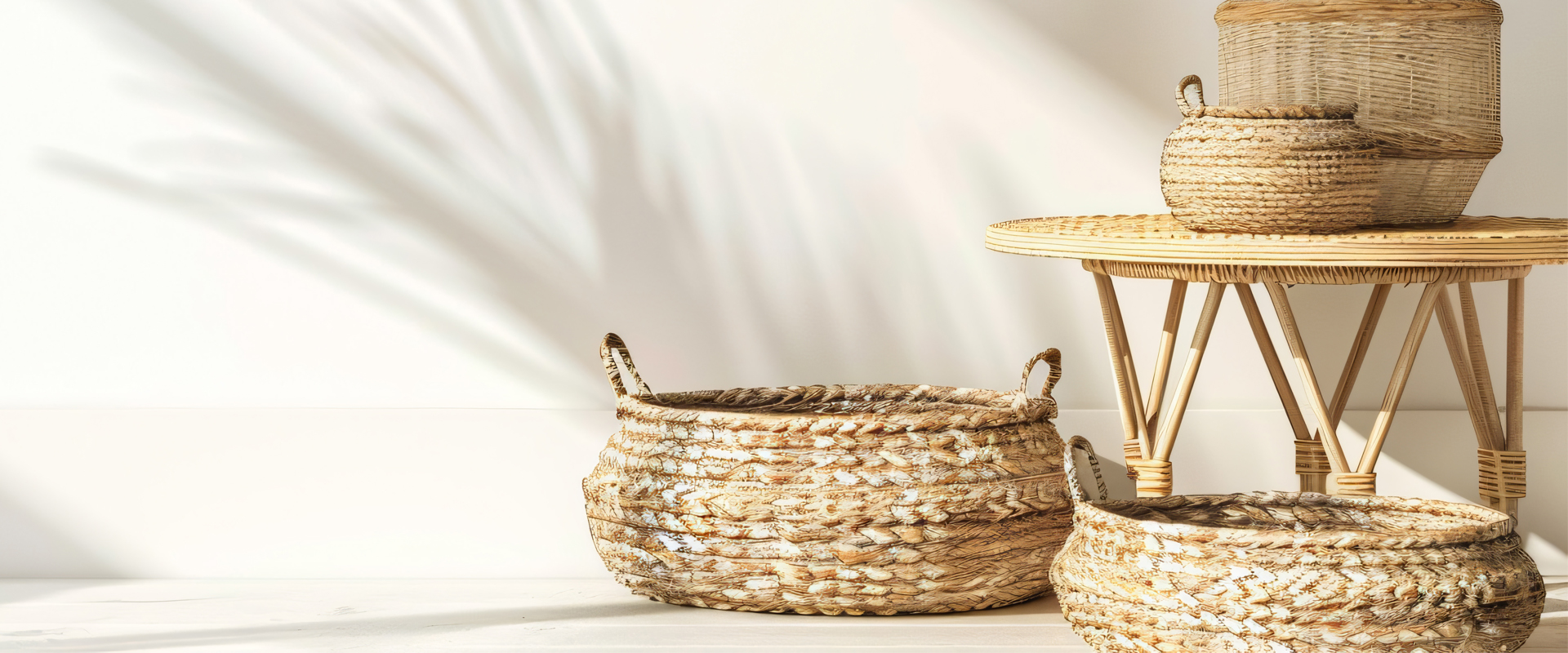
To address your storage needs, rattan and bamboo products are excellent choices thanks to their rustic beauty, eco-friendliness, and high breathability. Discover storage solutions designed for consistency and scalability—carefully crafted and supported by a controlled manufacturing process you can trust. We have a wide variety of designs and types for you to choose from. Below are specific usage and storage solutions:
See more
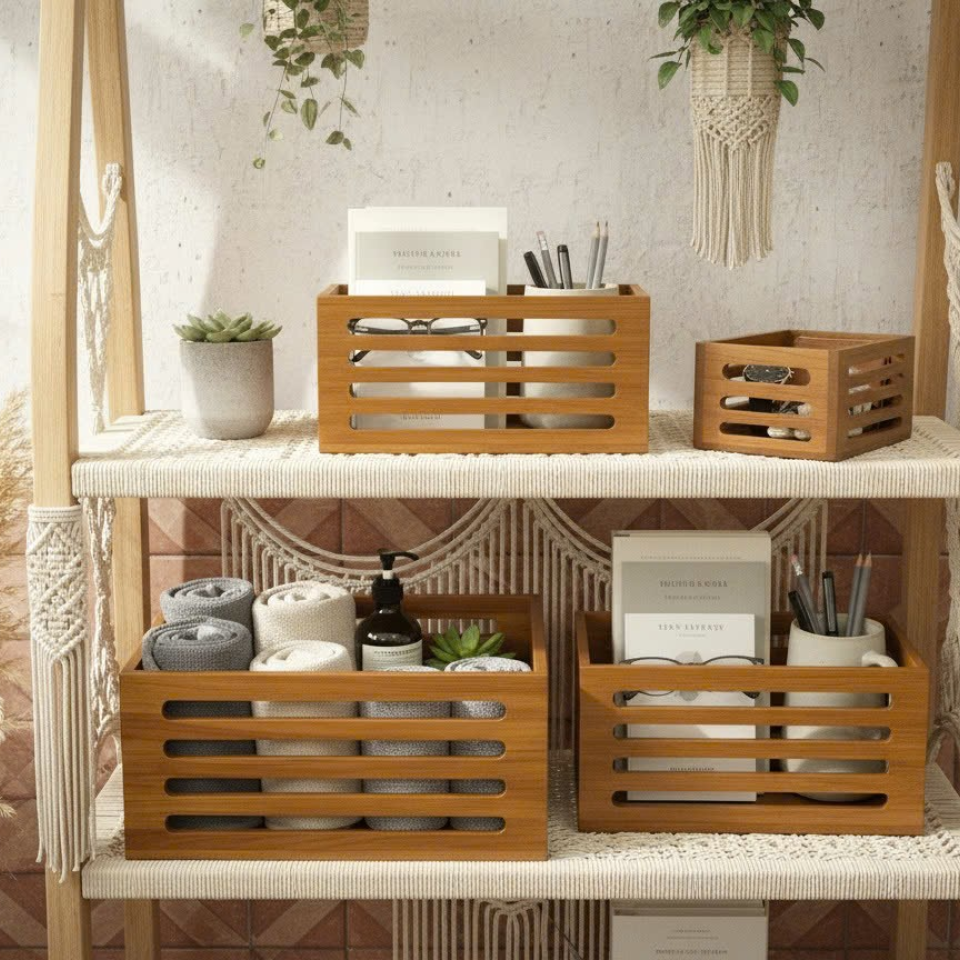
Laundry Hampers & Large Storage
Durable hampers. Consistent production. Built to scale with your business.
See more
Home Decor & Accessories
From decorative accents to functional pieces, our controlled production ensures consistent quality and refined finishing in every item.
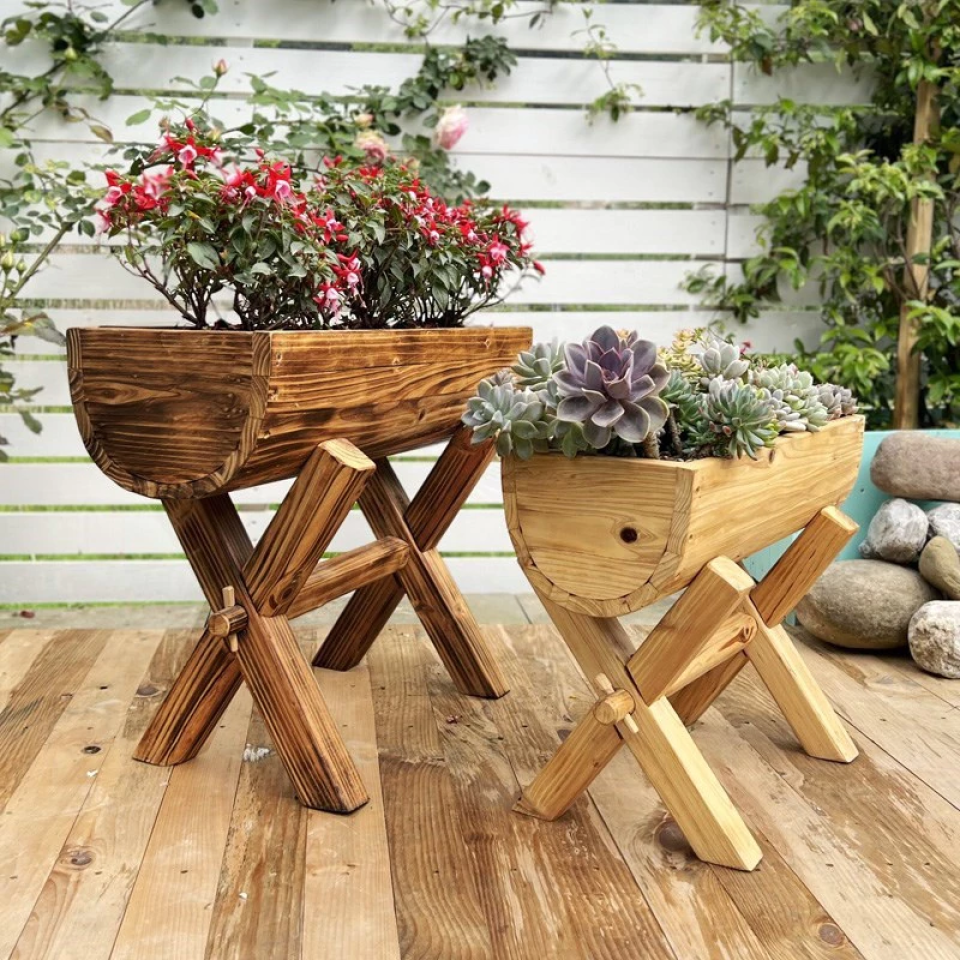
Structured Storage
Functional storage with a decorative touch — crafted with weaving fibers and supported by controlled production for consistent quality at scale.
See more
Partners / Clients













Explore the factory
Phu Minh Rattan, Bamboo and Handicrafts
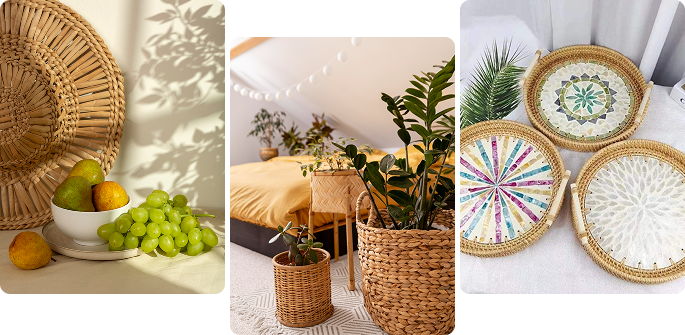
Where each frame tells the story of handcrafted items – from rattan and rush mats to rustic pottery. Discover how we bring the essence of nature into everyday life through our refined decor and simple yet emotionally resonant lifestyle.
Latest News & Updates
The Essential Guide to Woodware Quality Control: Our 5-Step Inspection System
15/04/2026
The Era of Radical Transparency in B2B Procurement
In an era of radical transparency and tightening global regulations, professional procurement officers and interior designers in the US and EU markets are no longer just looking for a beautiful product; they are looking for verified consistency. For natural home decor and woodware—a category that bridges the gap between organic aesthetics and functional durability—understanding the nuances of rigorous quality control is the ultimate tool for supply chain risk management.
At Ngoc Dong Ha Nam, we believe that unwavering quality is the cornerstone of premium manufacturing. This guide provides a scientific deep dive into our proprietary 5-Step Inspection System, the regulatory frameworks that govern our industry, and why mastering these elements matters to your bottom line.
1. The Anatomy of Flawless Woodware: Why Material Science Matters
Before diving into the inspection protocols, we must address the biological nature of our core materials. Unlike inert materials like plastic or stainless steel, natural fibers such as Acacia, Bamboo, Rattan, Seagrass, and Water Hyacinth are living, porous substrates. Their structural integrity and safety depend on three critical vectors:
The Raw Material: Is the species harvested at the right maturity to prevent natural degradation? (Our Acacia and Bamboo are globally recognized for their high density and structural stability).
Adhesives and Bindings: For woven products or edge-grained woodware, the glues and structural frames must be non-toxic, moisture-resistant, and climate-adaptable.
Surface Finishes: Whether it is a natural oil, lacquer, or water-based paint, the finish is the primary barrier between the environment and the natural fibers.
For a global buyer, a failure in any of these vectors leads to elevated defect rates, massive financial liability, and irreparable brand damage.
2. Step 1 & 2: Raw Material Verification and Moisture Calibration
In the high-stakes world of global home decor, quality control begins long before the assembly line. Our first two steps focus entirely on the foundational substrate.
2.1. Raw Material Grading (Step 1)
Every batch of Acacia, Bamboo, and natural weaving fiber (Rattan, Seagrass) undergoes strict botanical identification and visual grading. We screen for natural defects such as excessive knots, pest damage, or irregular grain patterns. Wood that does not meet our premium grade is immediately rejected or repurposed, ensuring only the highest-tier materials enter the production cycle.
2.2. Moisture Content (MC) Calibration (Step 2)
The single greatest threat to woodware exported to diverse climates is improper moisture content. When woodware travels from the humid climate of Vietnam to the dry winters of North America or Europe, it can warp or crack if not properly calibrated.
The Benchmark: We utilize state-of-the-art kiln drying technology to bring the Moisture Content of our Acacia and Bamboo down to a strict 8% to 12%. Each piece is tested with specialized digital moisture meters before it is cleared for shaping. This scientific precision prevents "micro-cracking," which is the primary site for structural failure and bacterial buildup.
3. Step 3 & 4: Structural Integrity and Surface Finishing
Once the material is stabilized, the manufacturing process begins. Our mid-line inspections ensure that the physical construction meets international ergonomic and safety standards.
3.1. Precision Assembly and Adhesives (Step 3)
During assembly, our QC engineers conduct rigorous stress tests. For woven items like Rattan and Water Hyacinth baskets, we test the tensile strength of the weave and the rust-resistance of the internal iron frames. For Acacia woodware, we inspect the joint integrity. We exclusively use LFGB and FDA-compliant, formaldehyde-free adhesives, ensuring that our laminated and edge-grained products are completely non-toxic.
3.2. Surface Finishes and Sensory Testing (Step 4)
This is where many manufacturers fail. We conduct comprehensive visual and sensory evaluations on all lacquers and oils. The finish must be uniformly applied, free of drips, and completely cured.
Furthermore, we perform a mandatory Sensory Evaluation to ensure the product does not emit volatile organic compounds (VOCs) or alter the ambient odor of the home environment. Acacia wood, characterized by its low natural odor, performs exceptionally well in these tests compared to high-tannin or highly resinous woods.
4. Step 5: Final Packaging and Global Compliance Verification
The final step in our inspection system guarantees that the product survives the arduous journey of global logistics.
4.1. The Drop Test and Micro-Climate Control (Step 5)
Before any container is sealed, the packaged goods undergo standard ISTA drop testing to verify the resilience of the master cartons. Additionally, we insert high-grade silica gel desiccants and utilize anti-mold paper to create a controlled micro-climate within the packaging, neutralizing the risk of humidity damage during ocean transit.
The Ngoc Dong Ha Nam Edge: We manufacture our products to meet the highest global standards by default. Our internal 5-Step System is designed to inherently exceed standard AQL (Acceptable Quality Limit) 2.5/4.0 requirements, giving our B2B partners total peace of mind for global distribution.
5. Beyond Basic QC: Managing Holistic Legal Risks
A professional buyer must look beyond basic defect rates to cover the full spectrum of modern compliance. In 2026, a high-quality product that is unethically sourced is a liability.
5.1. Ethical Manufacturing (BSCI & SMETA)
Quality extends to the quality of life of our artisans. Ngoc Dong Ha Nam is proudly audited under BSCI (Business Social Compliance Initiative) and SMETA (Sedex Members Ethical Trade Audit). These certifications guarantee fair labor practices, safe working conditions, and transparent supply chain management.
5.2. FSC® and Sustainability
In today's market, Safety = Sustainability. An acacia bowl or bamboo basket that is structurally perfect but illegally harvested creates a direct violation of the Lacey Act (US) or the EUDR (EU Deforestation Regulation). At Ngoc Dong Ha Nam, we integrate FSC-certified timber (Forest Stewardship Council) to ensure that your procurement strategy is legally bulletproof and environmentally regenerative.
6. Why Natural Materials are the Scientific Choice for Home Decor
Beyond their beautiful textures, the physical properties of our core materials make them superior choices for compliance-heavy markets:
Acacia Wood: High lignin content provides natural resistance to water absorption. Its structural stability makes it highly resistant to warping, ensuring long-term aesthetic value.
Bamboo: With a tensile strength rivaling steel, bamboo is an ultra-renewable resource that offers exceptional durability and a highly consistent grain structure for modern minimalist designs.
Rattan, Seagrass & Water Hyacinth: These fast-growing aquatic and climbing plants are naturally flexible yet incredibly robust when woven. They provide the highly sought-after biophilic design aesthetic while maintaining a minimal carbon footprint.
7. The Procurement Checklist: How to Verify Your Supplier
When auditing a factory in Vietnam or elsewhere, a professional buyer should demand a Technical File containing:
1. Standardized QC Reports: Detailed documentation of inline and final inspections, including precise Moisture Content readings.
2. Ethical Audit Summaries: Valid and up-to-date BSCI or SMETA audit reports.
3. Chain of Custody (CoC): Valid FSC® certificates proving the sustainable origin of the raw materials.
4. Bill of Materials (BOM): A detailed list of all glues, paints, and oils used, backed by their respective MSDS (Material Safety Data Sheets) to ensure REACH and FDA/LFGB compliance.
Conclusion: Partnering for Global Excellence
Compliance and quality control are not costs; they are investments in brand equity. For woodware and natural home decor, navigating the complexities of moisture calibration, material science, and global ethical standards requires a manufacturer that speaks the language of science and law.
At Ngoc Dong Ha Nam, we don't just create beautiful interior decor; we engineer reliability. By choosing a partner who prioritizes this rigorous 5-Step Inspection System, you ensure that your products move seamlessly through customs, onto retail shelves, and beautifully into the homes of consumers worldwide.

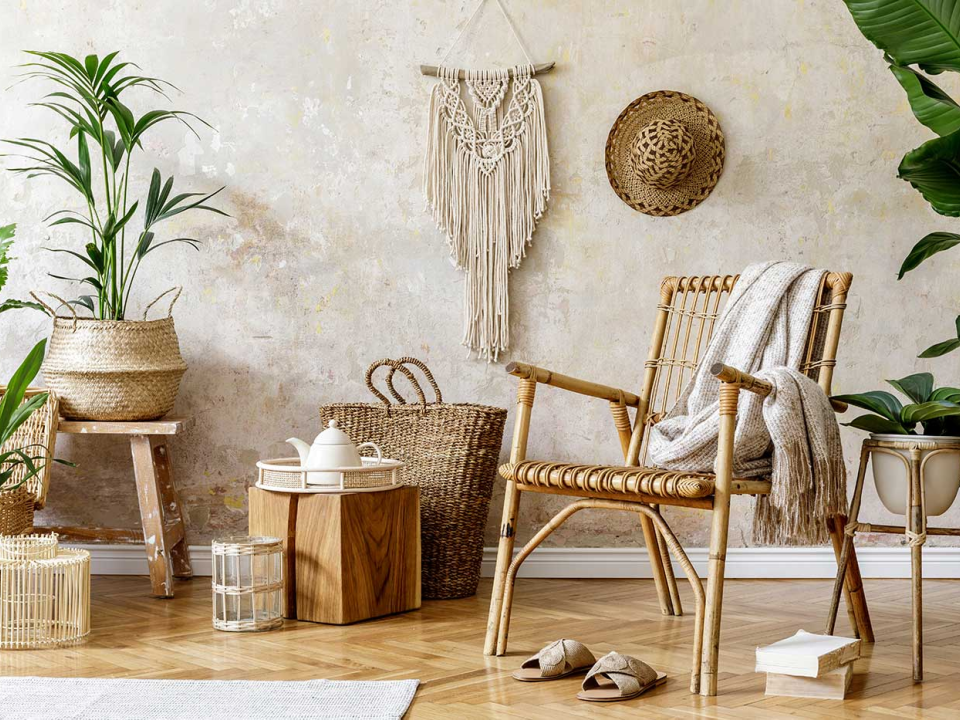
Creative ideas for decorating your living space with handcrafted rattan and bamboo products.
20/03/2026
Imagine this: A sourcing manager for a major US retailer opens a shipping container in a dry warehouse in Arizona. Inside are 10,000 Acacia wood salad bowls, handcrafted with precision in Vietnam. But as the doors swing open, a heartbreaking sound fills the air—the faint crack of wood fibers under stress. Within days, 30% of the shipment shows visible warping or deep structural splits.
What went wrong? The design was perfect. The branding was flawless. The finish was premium. The failure happened at the molecular level. It was a failure of Moisture Control.
In the world of high-volume B2B woodware export, moisture is "The Invisible Enemy." At Simply Acacia (Ngoc Dong Ha Nam), we believe that mastering wood moisture isn't just a manufacturing step—it is a rigorous science. This guide explores the lifecycle of water within Acacia wood, from the moment the timber is felled to its journey across the ocean, and how we ensure your ROI is protected through technical excellence.
Chapter 1: The Biology of Wood and Water – Understanding the "Bound" and the "Free"
To control moisture, we must first understand how wood "holds" water. Wood is a hygroscopic material, meaning it behaves like a living sponge, constantly seeking balance with its environment.
1.1. Free Water vs. Bound Water
Water exists in wood in two forms:
1. Free Water: Located in the cell cavities (lumens). This is the first to leave during the drying process.
2. Bound Water: Chemically bonded within the cell walls. Removing this water is where the true science begins.
The point at which all free water is gone, but the cell walls are still fully saturated, is called the Fiber Saturation Point (FSP)—typically around 30% moisture content. Any drying below this point causes the wood to shrink. If this shrinkage is not controlled with mathematical precision, internal stresses lead to the cracks that haunt sourcing managers.
1.2. Equilibrium Moisture Content (EMC)
The "Holy Grail" of wood manufacturing is reaching the Equilibrium Moisture Content (EMC). This is the state where the wood is neither gaining nor losing moisture because it is in perfect balance with the surrounding air’s humidity and temperature.
For a factory in the humid climate of Ha Nam, Vietnam (average humidity 80%), the EMC is very different from a retail store in Las Vegas (average humidity 20%). A Tier-1 partner must manufacture wood not for the environment it is in, but for the environment it is going to.
Chapter 2: The Kiln-Drying (KD) Masterclass – The Simply Acacia Standard
Air-drying (phơi tự nhiên) is sufficient for local handicrafts, but for global export to markets like the US, EU, or Australia, Kiln-Drying (Sấy lò) is non-negotiable.
2.1. Why Kiln-Drying is Vital for B2B
Sterilization: High temperatures kill insect larvae and fungal spores, ensuring compliance with international phytosanitary regulations.
Resin Setting: It "sets" the natural resins in Acacia wood, preventing them from bleeding through the finish later.
Stress Relief: A controlled kiln schedule allows wood fibers to relax as they shrink, minimizing internal tension.
2.2. Our 4-Stage Drying Protocol
At our 12,000m2 facility, we utilize advanced industrial kilns with computerized monitoring. Our schedule for Acacia Mangium typically follows these stages:
1. Pre-heating: Gradually raising the temperature to open the wood's "pores" without causing surface checks.
2. Drying: Controlled removal of water. We monitor the "Wet Bulb" and "Dry Bulb" temperatures to ensure the core of the wood dries at the same rate as the surface.
3. Equalizing: Ensuring every board in the kiln reaches the exact same moisture percentage.
4. Conditioning: Re-introducing a tiny, controlled amount of moisture to the surface to relieve any final "case-hardening" (stress).
Chapter 3: The "Gold Standard" Range: Why 8% to 12%?
For over 30 years, we have analyzed the failure rates of exported woodware. The data is clear: for Acacia wood to survive the transition from Vietnam to the global market, it must leave the factory at a moisture content (MC) of 8% to 12%.
Below 8%: The wood becomes too brittle. When it reaches a more humid environment, it may expand too aggressively, causing joints to fail.
Above 12%: The risk of mold growth and "warping" increases exponentially, especially during the 30-40 day sea transit in a hot container.
The Simply Acacia "Double-Check" System
We don't just test the wood once.
Post-Kiln: Every batch is tested using pin-type moisture meters.
Pre-Finishing: Moisture is checked again after the wood has been milled into its final shape.
Pre-Packing: A final scan ensures that the moisture has not "re-bounded" during the production process.
Chapter 4: Managing the "Micro-Climate" During Manufacturing
A common mistake in the industry is drying the wood perfectly, then leaving it in a humid finishing room for two weeks.
4.1. Climate-Controlled Production Zones
At Ngoc Dong Ha Nam, we manage the ambient humidity of our processing areas. By using industrial dehumidifiers and proper ventilation, we ensure that the "Equilibrium" achieved in the kiln is maintained while our artisans carve, sand, and finish the products.
4.2. The Finishing Barrier
As discussed in our Finishes Guide, the choice of oil or lacquer acts as a "moisture regulator." While no finish is 100% waterproof, a high-quality food-safe lacquer or a deep-penetrating mineral oil significantly slows down the rate of moisture exchange. This "slow-motion" exchange is what allows wood to adapt to a new climate without cracking.
Chapter 5: The Logistics Battle – Surviving "Container Rain"
The most dangerous part of a wood product’s life is the 30 days it spends in a steel box on the ocean.
5.1. The Phenomenon of Container Sweat
As a ship moves from the tropical waters of Southeast Asia to the colder climates of Europe or North America, the temperature inside the container fluctuates wildly. Moisture evaporates from the wood (and the wooden pallets) and condenses on the cold steel ceiling. This "Container Rain" then drips back onto the retail packaging, leading to mold and collapsed boxes.
5.2. Strategic Packaging Solutions
To protect our partners like Costco and Lidl, we employ a multi-layered defense:
Desiccant Integration: We use high-absorption silica gel or calcium chloride poles (like "Dry-Bags") inside the container to pull moisture out of the air.
Moisture Barrier Bags: For sensitive products, we utilize VCI or PE polybags to create a micro-environment for each individual unit.
Pallet Science: We ensure the wooden pallets used for shipping are also kiln-dried to the same standards as the product to prevent "cross-contamination" of moisture.
Chapter 6: The Simply Acacia Advantage – IT and AI in Moisture Management
Our leadership's background in Information Technology and AI gives us a unique edge in an industry often governed by "guesswork."
Predictive Analytics: We analyze historical weather data and shipping routes to adjust our kiln schedules. If we know a shipment is headed to a desert climate in peak summer, we may aim for the lower end of the 8-12% range.
Digital Traceability: Every batch of timber is assigned a digital ID. We log moisture readings at five different stages of production. If a customer reports an issue, we can trace back to the exact kiln load and the exact sensor data from that day. This level of transparency is why global giants trust us.
Conclusion: Trusting the Science, Securing Your Supply Chain
Moisture control is the difference between a successful product launch and a logistical nightmare. It is a science that requires expensive infrastructure, disciplined protocols, and decades of experience.
When you partner with Simply Acacia (Ngoc Dong Ha Nam), you aren't just buying wooden housewares; you are buying the peace of mind that comes with 30+ years of moisture expertise. We understand that your reputation is built on the durability of the products you sell, and we take the science of "The Invisible Enemy" as seriously as you take your brand.
Protect Your Next Collection
Don't leave your quality to chance. Contact our technical team today at simplyacacia.com to learn more about our kiln-drying protocols and how we can customize a moisture-management plan for your specific target market.
Simply Acacia: Engineered for Stability. Crafted for Beauty.
The Definitive Guide to Private Labeling (OEM/ODM) for Wooden Housewares
20/03/2026
In the modern retail landscape of 2026, the battle for consumer loyalty is no longer fought on price alone—it is fought on Brand Identity. For major retailers and boutique home decor brands alike, Private Labeling (OEM/ODM) has shifted from a mere cost-saving tactic to a core strategic necessity.
Whether you are a category manager at a "Big-Box" giant like Costco or a founder of a premium Scandinavian-style home brand, your success depends on finding a manufacturing partner who can translate a vision into a tangible, high-quality product. This guide provides an exhaustive look at the world of Private Labeling for wooden housewares, specifically focusing on the competitive advantages of sourcing from the heart of Vietnam’s woodworking hub.
Chapter 1: Understanding the Landscape – OEM vs. ODM
In the context of wooden housewares, the terms OEM and ODM are often used interchangeably, but for a professional buyer, understanding the distinction is vital for project planning.
1.1. OEM (Original Equipment Manufacturer): The "Your Design, Our Hands" Model
In an OEM partnership, you provide the blueprints. You have specific CAD drawings, wood grade requirements, and precise finishing instructions. The manufacturer’s role is to execute your vision with industrial precision.
Best for: Established retailers with in-house design teams (e.g., Target or Walmart) who need strict adherence to global brand standards.
1.2. ODM (Original Design Manufacturer): The "Our Innovation, Your Brand" Model
In an ODM partnership, you leverage the manufacturer’s internal design expertise. At Simply Acacia, we offer a library of pre-engineered, "market-ready" designs that can be customized with your branding.
Best for: Brands looking to enter a new category quickly without the heavy R&D costs of original product development.
Chapter 2: Why Vietnam is the Global Capital for Private Label Woodware
As global supply chains realign in 2026, Vietnam has transcended its reputation as a "low-cost alternative" to become a "high-value destination."
2.1. Unmatched Artisanal Heritage Meets Industrial Scale
Vietnam, particularly regions like Ha Nam, possesses a multi-generational legacy of handicraft. When you private label here, your products benefit from an "artisanal soul" that fully automated factories in other regions cannot replicate. Combined with 12,000$m^2$ facilities, this creates a unique hybrid of "Human Touch" and "Mass Production."
2.2. Favorable Trade Ecosystems
Sourcing from Vietnam provides a significant "Tariff Shield" through agreements like the EVFTA (for European markets) and CPTPP. For a private label brand, these savings directly translate into higher margins or more competitive retail pricing.
2.3. The 2026 Sustainability Mandate
With the EUDR (EU Deforestation Regulation) in full effect, Vietnam’s established FSC™ plantation networks (especially for Acacia) offer a level of transparency that is now a mandatory requirement for global trade.
Chapter 3: The Private Labeling Workflow – From Concept to "Golden Sample"
A successful OEM/ODM project is a journey of precision. Here is the Simply Acacia Protocol for a seamless launch:
Phase 1: The Design & Technical Review
We don't just accept a drawing; we audit it. Our engineering team reviews your design for "Manufacturing Feasibility."
Example: If a wood bowl wall is too thin for Acacia’s natural grain tension, we suggest micro-adjustments to prevent warping while maintaining the Minimalist/Organic Modern aesthetic you desire.
Phase 2: Material Customization
Private labeling allows you to define the "DNA" of your product.
Wood Selection: Sourcing the highest grade of Acacia (Grade A/B).
Mixed Materials: Integrating marble, slate, or metal accents—a major trend in 2026.
Custom Finishes: Choosing between matte lacquers, silk-touch beeswax, or heavy-duty food-grade oils.
Phase 3: Rapid Prototyping
In B2B commerce, speed is life. We aim to deliver a physical prototype within 7 to 10 days. This is the "Moment of Truth" where you can feel the weight, test the finish, and approve the branding.
Chapter 4: Branding Solutions – Beyond the Logo
Private labeling is the art of making a product "yours." We offer several high-precision branding methods:
Laser Engraving: Ideal for sharp, permanent logos that won't fade or peel. It provides a premium, "burnt-in" look that consumers associate with quality.
Heat Stamping: A traditional method that creates a subtle, tactile indentation in the wood.
Silkscreen Printing: Best for brands that want to incorporate specific brand colors (using food-safe, non-toxic inks).
Metal Inlays: For the ultimate luxury tier, embedding a small metal medallion with your logo directly into the Acacia wood.
Chapter 5: Retail-Ready Packaging & Logistics
For a category manager at Costco or Lidl, the product is only half the battle. The packaging must be "Supply Chain Proof."
5.1. Packaging Engineering
We offer full-service packaging development:
ISTA-3A Compliance: Designing boxes that survive the rigors of e-commerce shipping.
PDQ & Display Units: For "Big-Box" retailers, we design and pack products into ready-to-shelf display units, reducing the retailer’s labor costs.
5.2. Private Label Documentation
Every shipment comes with your brand-specific documentation:
FSC™ Chain of Custody certificates under your name.
FDA/LFGB food safety reports for your specific SKU.
Customized Care Instructions inserts in multiple languages.
Chapter 6: Quality Assurance for Global Giants
Large-scale private labeling requires a "Zero-Failure" mindset. At Simply Acacia, our 30+ years of experience have taught us that quality control must be decentralized.
1. Incoming Material QC: Testing every log for moisture before it enters the kiln.
2. Inline Production QC: Checking dimensions and branding alignment at every workstation.
3. Final Random Inspection (FRI): Applying AQL 2.5/4.0 standards to ensure that even a 250,000-unit order is consistent from the first bowl to the last.
Chapter 7: Scaling Your Brand with Simply Acacia
Why choose Simply Acacia (Ngoc Dong Ha Nam) as your OEM/ODM partner?
We Speak "Big-Box": We have successfully managed the complex requirements of Walmart, Target, and Aldi. We understand their portals, their labeling logic, and their strict delivery windows.
IT-Driven Transparency: With a leadership team rooted in IT and AI, we provide real-time production updates. You are never "in the dark" about where your brand’s inventory stands.
Ethical Manufacturing: Our BSCI and SMETA audit-ready status means your brand is protected from the reputational risks of unethical labor practices.
Industrial Capacity: With a 12,000m2 facility, we have the "room to grow" with you. As your brand goes from 1 SKU to 50, we have the infrastructure to support your expansion.
Conclusion: Building a Legacy, One Piece at a Time
Private labeling in the woodware industry is a partnership of trust. You are trusting a manufacturer in Vietnam with your brand’s most valuable asset: its reputation.
In 2026, the brands that win will be those that prioritize authenticity, sustainability, and technical excellence. By choosing a partner that combines three decades of tradition with modern digital precision, you aren't just sourcing a product—you are building a legacy.
Are you ready to bring your brand to life?
Contact the Simply Acacia OEM/ODM Team today at simplyacacia.com. Let’s discuss your 2026 collection and turn your design sketches into the next best-selling product on the global market.

The Ultimate Handbook for Large-Scale Retail Sourcing
18/03/2026
In the world of global retail, "Big-Box" sourcing is a high-stakes game where there is zero margin for error. When you are responsible for stocking 4,000+ stores across multiple continents, a 1% defect rate or a 10-day shipping delay doesn't just disrupt a category—it costs millions in lost revenue and erodes shareholder trust.
For giants like Walmart, Costco, and Target, the sourcing journey in 2026 has shifted from a search for the "lowest price" to a search for the "most resilient partner." This handbook provides a deep dive into the strategic pillars of large-scale sourcing, specifically focusing on the Vietnamese Acacia woodware sector, and how a Tier-1 manufacturer must operate to support the world’s largest retail ecosystems.
Chapter 1: The Infrastructure of Scale – Beyond the Workshop
Massive retail contracts require more than just "craftsmanship"; they require industrial capacity. A common mistake in international sourcing is partnering with a factory that lacks the physical infrastructure to scale up when a seasonal promotion goes viral.
1.1. Physical Capacity: The 12,000m² Benchmark
A Tier-1 partner in Vietnam must operate at a scale that allows for simultaneous production lines. For example, a 12,000m² facility is the industry benchmark for a factory capable of handling high-volume accounts. This space ensures:
Separation of Processes: Distinct zones for raw timber storage, kiln-drying, precision cutting, sanding, and dust-free finishing.
In-House Kiln Drying: Control over the most critical variable—moisture. Relying on third-party drying services is a major risk factor for large retailers.
1.2. Volume Throughput: The 20-30 Container Standard
Large retailers require "Continuous Replenishment." A factory must prove a consistent output of at least 20 to 30 containers per month. At Simply Acacia, our history of managing projects like the 250,000-unit Lidl bowl shipment and the 85-container Costco project proves that our infrastructure is built for "Peak Load" performance without sacrificing quality.
Chapter 2: Audit Readiness – The "Golden Ticket" to the Shelf
For a sourcing manager at Target or Walmart, the factory audit is the ultimate gatekeeper. In 2026, being "audit-ready" means more than just a clean floor; it means total transparency across three critical domains:
2.1. Social Compliance (BSCI & SMETA)
The modern consumer is hyper-aware of labor ethics. A partner must hold a valid BSCI (amfori) or SMETA (Sedex) audit with an "A" or "B" rating. These audits verify:
Fair Wages & Hours: Ensuring the 1,000+ artisans in our network are treated with dignity.
Health & Safety: Fire safety, ventilation, and PPE usage are non-negotiable for big-box approval.
2.2. Security and Chain of Custody (SCAN & C-TPAT)
Security is a primary concern for US-bound shipments. Participation in SCAN (Supplier Compliance Audit Network) or C-TPAT (Customs-Trade Partnership Against Terrorism) is essential. These protocols ensure that your cargo is protected from tampering, from the factory gate in Ha Nam to the Port of Haiphong.
2.3. Environmental Stewardship (FSC™ & EUDR)
With the EUDR (EU Deforestation Regulation) and the US Lacey Act in full force, traceability is the new currency. A Tier-1 partner must provide a digital paper trail from the specific forest plot to the final retail box. FSC 100% certification is the baseline for any serious woodware tender in 2026.
Chapter 3: Quality Control at Scale – The AQL 2.5/4.0 Reality
Maintaining consistency across 10 units is easy. Maintaining it across 250,000 units is an engineering challenge. Large retailers utilize AQL (Acceptable Quality Limit) standards, and a manufacturer must be integrated into this language.
3.1. Inline vs. Final Inspection
Waiting until the end of production to check quality is a recipe for disaster. A professional factory employs Inline QC, where products are inspected at every workstation:
Pre-Production: Testing raw timber moisture.
Milling: Checking dimensional accuracy against CAD drawings.
Finishing: Ensuring uniform oil application and surface smoothness.
3.2. Data-Driven QC via IT Integration
At Simply Acacia, we leverage our background in Information Technology and AI to manage quality data. By digitizing QC logs, we can identify "micro-trends" in production defects and correct them before they impact a single container. This level of technical sophistication is what separates a traditional workshop from a 21st-century manufacturing partner.
Chapter 4: Logistics & Supply Chain Resilience
A beautiful product that arrives late is a liability. For big-box retailers, the supply chain must be a well-oiled machine.
4.1. Proximity to Infrastructure
Efficiency starts with location. Being situated in Ha Nam Province provides a strategic advantage—direct access to the modernized highway network leading to Haiphong Port. This reduces "land transit" risk and ensures that your goods are on the water as quickly as possible.
4.2. Container Optimization and Packaging
Large retailers sell "space" as much as they sell products. A manufacturer must be an expert in Packaging Engineering:
ISTA-3A Standards: Ensuring the "Retail Color Box" survives the rigors of global shipping and the "last mile" delivery to a consumer's home.
PDQ & Palletization: Designing displays that go straight from the container to the retail floor, reducing labor costs for the retailer.
Chapter 5: ESG and the 2026 Mandate
"Sustainability" has evolved from a PR buzzword into a core procurement requirement. Big-box retailers are now setting "Net Zero" targets for their Scope 3 emissions (their suppliers).
5.1. Low-Carbon Manufacturing
In 2026, Simply Acacia is leading the way by integrating renewable energy into our 12,000m² facility. By choosing a factory that utilizes solar power and biomass from wood waste for its kilns, retailers can report significant carbon reductions in their annual ESG filings.
5.2. Natural Materials as a Strategy
Acacia, Bamboo, and Seagrass are not just "eco-friendly"; they are renewable resources that grow rapidly in Vietnam. Unlike slow-growing hardwoods from endangered forests, Acacia is a plantation-grown crop that supports local biodiversity and provides a sustainable livelihood for thousands of "satellite" artisans.
Chapter 6: Why Simply Acacia (Ngoc Dong Ha Nam) is the Partner of Choice
With a legacy dating back to 1988, our enterprise has not just witnessed the evolution of global sourcing; we have helped shape it.
6.1. Experience with the Giants
We don't just "hope" to work with Walmart or Costco—we already have. Our team understands the specific portals, the labeling requirements, and the strict delivery windows that these giants demand. We speak the language of "Tier-1 Vendor" because we live it every day.
6.2. The Innovation Edge
While our roots are in the artisanal craft of Ha Nam, our future is driven by Artificial Intelligence and IT. We use technology to optimize logistics, predict material behavior, and ensure that our communication is as precise as our woodworking.
Conclusion: Moving from Vendor to Strategic Partner
The difference between a "vendor" and a "strategic partner" is Reliability. For a sourcing manager at a global retailer, the ultimate goal is to find a partner who makes their job easier—a partner who understands audits, respects lead times, and delivers quality without constant supervision.
As you plan your 2026 sourcing strategy, consider the peace of mind that comes with 30+ years of experience and 12,000m² of industrial capacity. At Simply Acacia, we are ready to support your next global launch.
Why Acacia is the #1 Choice for Sustainable Housewares in 2026: A Comprehensive B2B Guide
16/03/2026
The Evolution of Conscious Sourcing in 2026
As we navigate the dynamic landscape of 2026, the global home decor and housewares market has reached a definitive turning point. The era of greenwashing is over. Today's end-consumers demand absolute transparency, unparalleled durability, and authentic environmental stewardship. For global buyers, procurement officers, and interior designers, this shift presents a monumental challenge: how do you source materials that meet rigorous international sustainability standards without compromising on aesthetic brilliance or profit margins?
Enter Acacia wood. While materials like bamboo, seagrass, rattan, and water hyacinth continue to dominate the woven and soft-furnishing sectors, Acacia has rapidly emerged as the undisputed king of sustainable hard goods. As the Marketing Director and Sustainable Supply Chain Consultant at Ngoc Dong Ha Nam, I have witnessed firsthand the exponential surge in B2B demand for this extraordinary material. Retailers and designers are no longer just asking for 'wood'; they are specifically mandating FSC-certified Acacia.
Why this sudden, overwhelming preference? In a market where supply chain resilience is just as critical as the product itself, Acacia offers an unparalleled triad of benefits: rapid renewability, structural invincibility, and a breathtaking natural grain. If your 2026-2027 collections do not feature Acacia prominently, you are missing out on the most significant value-driver in the modern eco-luxury sector. Let us explore why Acacia is not just a trend, but the foundational material for the future of sustainable housewares.
Unpacking the Acacia Advantage: Durability, Renewability, and Compliance
To understand why Acacia commands the #1 spot in 2026, we must examine it through the lens of both the botanist and the global supply chain auditor. Acacia is a genus of trees and shrubs that thrives in tropical and subtropical regions. Unlike traditional hardwoods such as oak or mahogany, which can take up to fifty years to mature, many species of Acacia are fast-growing, reaching harvestable maturity in just 7 to 10 years. This rapid growth cycle makes it an incredibly efficient carbon sink and a highly renewable resource, alleviating the immense pressure placed on old-growth forests.
For the discerning B2B buyer, the true value of Acacia lies in its remarkable physical properties and the security of its supply chain:
Exceptional Janka Hardness: Acacia wood is notoriously dense and robust. It frequently outscores traditional hardwoods on the Janka hardness scale, making it highly resistant to scratches, dents, and the daily wear-and-tear expected of premium housewares. This durability translates to a lower return rate and higher customer satisfaction.
Inherent Water and Antibacterial Resistance: Naturally rich in oils, Acacia repels moisture effortlessly. This makes it the ultimate material for kitchenware, bathroom accessories, and outdoor dining sets. Its natural antibacterial properties align perfectly with the heightened global focus on home hygiene.
Ironclad Supply Chain Certifications: At Ngoc Dong Ha Nam, we understand that a material is only as sustainable as the hands that harvest and shape it. Our Acacia is strictly FSC-certified (Forest Stewardship Council), guaranteeing that the wood is sourced from responsibly managed forests that provide environmental, social, and economic benefits.
Ethical Manufacturing (BSCI & SMETA): Beyond the forest, the journey of our Acacia housewares is governed by rigorous ethical standards. Our production facilities comply fully with BSCI (Business Social Compliance Initiative) and SMETA (Sedex Members Ethical Trade Audit) frameworks. For global buyers, this means zero risk of modern slavery, guaranteed fair wages, and safe working conditions. In 2026, this level of audit-ready transparency is non-negotiable.
By integrating Acacia into your supply chain, you are not merely purchasing a commodity; you are investing in a verified, risk-free, and highly resilient procurement strategy that withstands the strictest global regulatory scrutiny.
Elevating Global Collections: The Designer's Dream Material
While supply chain compliance satisfies the procurement team, it is the sheer aesthetic magnetism of Acacia that captures the hearts of interior designers and end-consumers. In the 2026 design landscape, where trends like 'Biophilic Design', 'Japandi', and 'Warm Minimalism' reign supreme, Acacia wood serves as the perfect anchor. It brings an authentic, grounding element of nature directly into the home.
From an interior design perspective, Acacia is a masterpiece of visual texture. It features a highly distinctive, contrasting grain pattern that sweeps elegantly from light amber to deep, rich mahogany. No two pieces of Acacia are exactly alike. This inherent uniqueness allows brands to market their housewares not as mass-produced widgets, but as bespoke, artisanal creations. When a consumer purchases an Acacia serving tray, a sculptural fruit bowl, or a meticulously crafted cutting board, they are acquiring a functional piece of art.
Furthermore, Acacia's versatility is a merchandiser's dream. It pairs flawlessly with other sustainable materials. Imagine the tactile brilliance of a storage collection that combines the warm, solid foundation of Acacia wood with the organic, woven textures of Rattan, Seagrass, or Water Hyacinth. At Ngoc Dong Ha Nam, our master artisans specialize in these sophisticated multi-material integrations, creating high-margin, premium products that elevate any retail catalog.
Premium Positioning: The luxurious weight and finish of Acacia allow for premium pricing strategies, significantly boosting your ROI.
Heirloom Quality: In a push back against 'fast furniture' and disposable decor, Acacia products are marketed as heirloom pieces that age beautifully, developing a rich patina over time.
Customizable Finishes: Whether your brand identity leans towards a raw, matte organic look or a polished, contemporary sheen, Acacia readily accepts eco-friendly finishes to match your exact design specifications.
By choosing Acacia, you are empowering your brand to deliver a narrative of refined eco-luxury. You satisfy the consumer's deep-seated desire for products that are beautiful, functional, and unequivocally kind to the planet. It is the ultimate alignment of aesthetics and ethics.
Secure Your Sustainable Supply Chain with Ngoc Dong Ha Nam
The transition to hyper-sustainable, premium housewares is accelerating, and the brands that secure reliable, certified sourcing today will dominate the market tomorrow. Acacia wood is your definitive pathway to achieving both aesthetic excellence and rigorous ESG compliance in 2026.
Do not leave your supply chain to chance. Partner with Ngoc Dong Ha Nam, a globally recognized leader in sustainable manufacturing. With our deep-rooted expertise in natural materials, our unwavering commitment to FSC, BSCI, and SMETA standards, and our world-class artisanal craftsmanship, we are ready to bring your visionary collections to life.
Request our 2026-2027 Acacia Collection Catalog to see our latest, trend-forward designs.
Schedule a Supply Chain Consultation with our expert team to discuss custom OEM/ODM manufacturing, volume capabilities, and certification audits.
Order Sample Kits to experience the unparalleled quality, weight, and finish of our sustainably sourced Acacia firsthand.
Take the lead in the eco-luxury revolution. Contact Ngoc Dong Ha Nam today and let us build a more beautiful, sustainable future together.
Let’s Turn Your Designs Into Scalable Production
Share your requirements, and our team will review your specifications, materials, and quantities — then get back to you with clear next steps for sampling and production.
Explore All Products